Currently Empty: ₹0.00


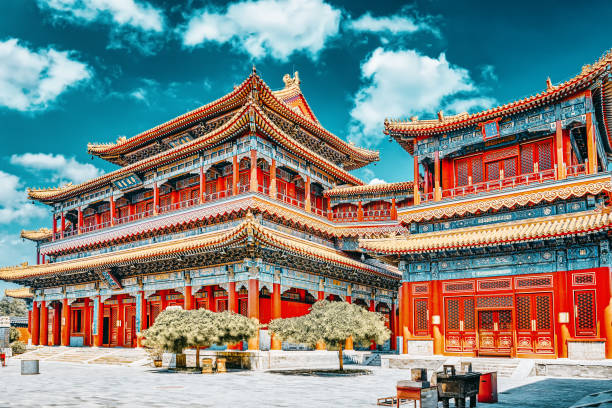
Lama Temple (Yonghe Temple) — Beijing, China: A Spiritual Journey into Chinese Culture
The Lama Temple, also known as Yonghe Temple, is one of the most renowned and revered Tibetan Buddhist temples located in the heart of Beijing, China. Known for its stunning architecture, rich history, and spiritual significance, it is a must-visit destination for tourists, history buffs, and spiritual seekers alike.
Timing to Visit
The best time to visit the Lama Temple is during the spring and autumn months when the weather is mild and pleasant. The temple is open throughout the year, but visiting during peak tourist seasons (summer holidays) can lead to larger crowds. If you prefer a quieter experience, early morning visits are recommended, especially during weekdays.
Address
Lama Temple (Yonghe Temple)
12 Yonghegong Street, Dongcheng District, Beijing, China.
Timings of Visit
- Opening Hours: 9:00 AM to 4:30 PM
- Best Time to Visit: 9:00 AM – 10:30 AM for fewer crowds
Why We Visit There
The Lama Temple is a spiritual and cultural landmark. It offers a serene and peaceful environment to explore Tibetan Buddhism’s sacred art, architecture, and practices. Visitors come here not only to appreciate the beauty of its construction but also to learn about Buddhist teachings, meditate, and experience the tranquility of the temple’s prayer halls and courtyards.
The temple is an iconic symbol of Tibetan Buddhism in Beijing and is the residence of some of China’s most respected Buddhist monks. Visitors can observe prayer ceremonies, witness ancient rituals, and explore the temple’s intricately designed halls and sacred statues.
One of the main reasons to visit the Lama Temple is the Maitreya Buddha statue, an awe-inspiring statue made from sandalwood and standing at a height of 26 meters. This gigantic statue is the tallest of its kind in China, and its presence adds to the temple’s profound spiritual ambiance.
Additionally, the temple features a museum that displays Buddhist artifacts, historical scriptures, and statues that trace the development of Buddhism in China. Visitors can also partake in guided tours to understand the temple’s historical and cultural significance more deeply.
Story of the Temple
The Lama Temple was originally built in 1694 during the Qing Dynasty as the residence of Emperor Yongzheng before he ascended to the throne. The temple, initially called the “Palace of the Lama,” was intended for use by the emperor’s family. However, after Emperor Yongzheng’s rise to the throne, the structure was repurposed as a Tibetan Buddhist temple.
The temple’s transformation into a place of Buddhist worship was formally completed in 1744 when it was opened as a lama monastery. Over the years, the temple has undergone numerous renovations and restorations to preserve its cultural and architectural heritage.
The temple is particularly famous for its Tibetan influence, as it houses a variety of Tibetan Buddhist art, scriptures, and artifacts. It remains an active center for Buddhist worship and spiritual practice, attracting thousands of visitors from all around the world.
In 1949, the Lama Temple was designated as a cultural heritage site by the People’s Republic of China. Today, it stands as a beacon of spiritual calm, attracting both tourists and devout Buddhists alike who come to seek solace, enlightenment, and a deeper understanding of Tibetan Buddhism.
Contact Us:
Visit us at www.indianvedicastrologer.com
For more information on astrology and spiritual consultations:
- Numerology
- Gemology
- Vastu
- Talk to Astrologer
- Video Gallery